Entrepreneurship is a challenging yet rewarding journey. Navigating the complexities of starting and scaling a business requires strategic planning, resilience, and often, expert guidance. Entrepreneurship coaching provides precisely that—a tailored approach to help aspiring and established entrepreneurs overcome obstacles, achieve their goals, and unlock their full potential. This exploration delves into the multifaceted world of entrepreneurship coaching, examining its core principles, ethical considerations, and practical applications.
From defining the various types of coaching available to exploring the crucial role of business development strategies, we’ll uncover how skilled coaches empower entrepreneurs at every stage of their journey. We will also examine securing funding, developing robust business models, and crafting effective business strategies. The discussion will also touch upon the often-overlooked yet significant impact of business travel on entrepreneurial success.
Defining Entrepreneurship Coaching

Entrepreneurship coaching is a specialized form of coaching designed to support individuals in building and growing successful businesses. It goes beyond general business advice, focusing on the personal development and strategic thinking of the entrepreneur themselves, empowering them to navigate the complexities of the entrepreneurial journey. This approach fosters self-awareness, resilience, and effective decision-making, ultimately leading to increased business success.
Core Principles of Entrepreneurship Coaching
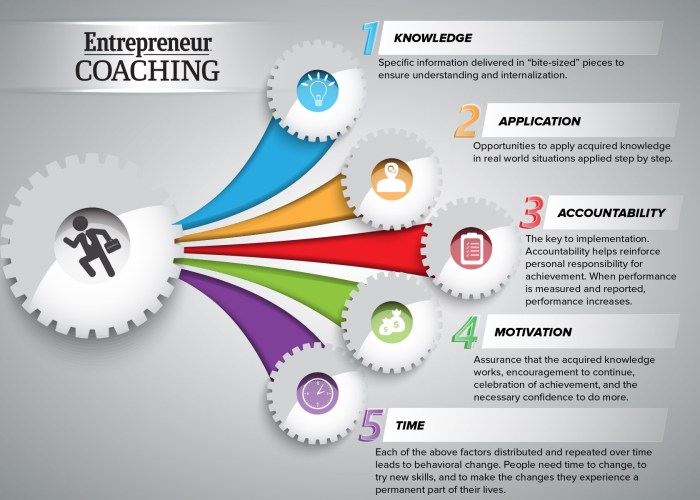
The core principles of entrepreneurship coaching revolve around a collaborative partnership between the coach and the entrepreneur. The process is highly personalized, tailored to the specific needs, goals, and challenges faced by each individual. Key principles include goal setting and achievement, accountability and support, identifying and overcoming limiting beliefs, strategic planning and execution, and fostering self-awareness and emotional intelligence.
The coach acts as a guide, providing tools, resources, and insights to help the entrepreneur achieve their vision.
Types of Entrepreneurship Coaching
Entrepreneurship coaching manifests in various forms, catering to different needs and preferences. Some coaches specialize in specific industries, such as tech startups or sustainable businesses. Others focus on particular stages of business development, like launching a new venture or scaling an existing one. There’s also a spectrum of coaching styles, from highly structured programs to more flexible, individualized approaches.
Some coaches use a primarily mentoring approach, leveraging their own entrepreneurial experience, while others take a more skills-based approach, focusing on developing specific business capabilities like financial management or marketing.
Comparison with Other Forms of Business Support
While entrepreneurship coaching shares similarities with other forms of business support, such as mentoring, consulting, and business training, there are key differences. Consulting typically focuses on specific business problems and provides expert advice, whereas coaching emphasizes personal development and self-discovery. Mentoring often involves a more informal relationship, with a mentor sharing their experience and wisdom. Business training provides structured learning on specific skills, but lacks the personalized attention and accountability of coaching.
Entrepreneurship coaching integrates elements of all these approaches, offering a holistic and tailored support system.
Benefits of Entrepreneurship Coaching at Different Stages
The benefits of entrepreneurship coaching vary depending on the entrepreneur’s stage of development. For startups, coaching can provide crucial guidance on navigating the initial hurdles of business creation, such as developing a business plan, securing funding, and building a team. For established businesses, coaching can help with scaling operations, managing growth, and overcoming challenges related to leadership and organizational development.
For entrepreneurs facing personal or professional burnout, coaching can offer valuable support in regaining balance and renewing their entrepreneurial passion. A successful example is the coaching received by Elon Musk in his early days at SpaceX, helping him navigate critical decision-making during crucial funding rounds.
Hypothetical Entrepreneurship Coaching Program
A hypothetical 12-week entrepreneurship coaching program could incorporate modules focusing on: (1) Defining Vision and Goals: clarifying the entrepreneur’s long-term vision and setting SMART goals; (2) Business Model Development: refining the business model and identifying key value propositions; (3) Marketing and Sales Strategies: developing effective marketing and sales plans; (4) Financial Management: understanding financial statements and managing cash flow; (5) Team Building and Leadership: building a high-performing team and developing leadership skills; (6) Overcoming Challenges and Building Resilience: developing strategies for overcoming obstacles and managing stress; (7) Strategic Planning and Execution: creating a detailed business plan and executing it effectively.
Each module would include weekly coaching sessions, personalized action plans, and access to relevant resources. The program would culminate in a comprehensive business review and a plan for ongoing growth.
Ethical Considerations in Entrepreneurship Coaching
Entrepreneurship coaching, while aiming to empower individuals, presents unique ethical challenges due to the inherent power dynamic and the deeply personal nature of the coaching relationship. Navigating these challenges requires a strong ethical compass and a commitment to upholding the highest professional standards. This section will explore potential ethical dilemmas, best practices, and regional variations in ethical codes to provide a comprehensive understanding of ethical responsibilities in this field.
Potential Ethical Dilemmas Faced by Entrepreneurship Coaches
Ethical dilemmas in entrepreneurship coaching can arise from several sources. Conflicts of interest, such as accepting gifts or favors from clients or engaging in business ventures with them, can compromise objectivity and impartiality. Boundary violations, including blurring the lines between professional and personal relationships, can damage trust and create uncomfortable situations. Maintaining client confidentiality while also adhering to legal requirements, such as reporting suspected illegal activity, requires careful judgment and adherence to professional guidelines.
Furthermore, coaches must grapple with the potential for undue influence, ensuring they don’t push clients into decisions that aren’t aligned with their best interests or values. Finally, the temptation to overpromise results or utilize manipulative techniques to secure clients must be rigorously resisted.
Best Practices for Maintaining Ethical Standards in Coaching Relationships
Maintaining ethical standards requires proactive measures. A clearly defined coaching agreement outlining roles, responsibilities, fees, and confidentiality expectations is crucial. Regularly reviewing this agreement with the client ensures ongoing transparency and mutual understanding. Coaches should actively seek supervision or mentorship from experienced colleagues to address complex ethical challenges and receive guidance on navigating difficult situations. Continuous professional development helps coaches stay updated on best practices and ethical guidelines.
Coaches should also prioritize self-reflection and maintain awareness of their own biases and limitations, recognizing when they need to refer a client to a more suitable professional. This proactive approach helps to mitigate potential ethical breaches and fosters a trusting and productive coaching relationship.
Comparison of Ethical Codes of Conduct Across Different Regions
While a universally standardized ethical code for entrepreneurship coaches doesn’t exist, many professional coaching organizations offer guidance. For example, the International Coaching Federation (ICF) provides a comprehensive Code of Ethics that emphasizes integrity, accountability, and client well-being. Similar codes exist in various regions, often reflecting cultural nuances and legal frameworks. However, core principles, such as confidentiality, competence, and respect for client autonomy, generally remain consistent.
Differences may lie in specific regulations regarding data privacy, disclosure requirements, and the handling of complaints. Coaches should familiarize themselves with relevant codes and regulations in their specific geographic location and professional context.
Transparency and Informed Consent in Entrepreneurship Coaching
Transparency and informed consent are cornerstones of ethical coaching practice. Before commencing coaching, clients must be fully informed about the coaching process, including the coach’s qualifications, fees, methods, and limitations. This information should be presented in a clear and understandable manner, allowing clients to make an informed decision about whether to engage in coaching. Throughout the coaching relationship, ongoing transparency is essential.
Coaches should openly communicate their observations, insights, and any potential conflicts of interest. Clients should be empowered to ask questions, express concerns, and participate actively in shaping the coaching process. Obtaining explicit consent for specific actions, such as recording sessions or sharing client information with third parties, is crucial for maintaining ethical integrity.
A Code of Ethics for Entrepreneurship Coaches
This code Artikels key ethical principles for entrepreneurship coaches:
Principle 1: Respect for Client Autonomy: Coaches will respect client autonomy and empower clients to make their own decisions. This includes avoiding manipulative or coercive techniques. Example of Ethical Behavior: Presenting various options to a client without imposing a preferred choice. Example of Unethical Behavior: Pressuring a client into a business decision against their better judgment.
Principle 2: Confidentiality: Coaches will maintain client confidentiality unless legally obligated to disclose information. Example of Ethical Behavior: Protecting client data and not sharing sensitive information without consent. Example of Unethical Behavior: Discussing a client’s business strategy with another client.
Principle 3: Competence and Integrity: Coaches will only provide services within their area of expertise and act with honesty and integrity in all interactions. Example of Ethical Behavior: Referring a client to a specialist when facing a problem outside of one’s expertise. Example of Unethical Behavior: Claiming expertise in an area where the coach lacks adequate knowledge or experience.
Principle 4: Professional Boundaries: Coaches will maintain clear professional boundaries with clients, avoiding dual relationships or conflicts of interest. Example of Ethical Behavior: Declining gifts or favors that could compromise objectivity. Example of Unethical Behavior: Developing a personal relationship with a client.
Principle 5: Ongoing Professional Development: Coaches will commit to continuous learning and development to enhance their skills and knowledge. Example of Ethical Behavior: Regularly attending workshops and conferences to stay updated on best practices. Example of Unethical Behavior: Failing to update skills and knowledge, leading to outdated or ineffective coaching.
The Business Coaching Process within Entrepreneurship Coaching
Entrepreneurship coaching goes beyond simply offering business advice; it’s a collaborative journey focused on the entrepreneur’s personal and professional growth. The business coaching process within this framework is iterative, adaptable, and deeply personalized to the client’s unique needs and goals. A structured approach, however, ensures progress and accountability.
The business coaching process typically unfolds in several distinct stages, each building upon the previous one to foster sustainable business success. These stages are not always rigidly defined, and the order might shift depending on the client’s specific circumstances and priorities. Flexibility is key to effective coaching.
Stages of a Business Coaching Engagement
A typical business coaching engagement involves several key stages. Understanding these stages helps both the coach and the client establish a clear roadmap for success.
- Assessment and Goal Setting: This initial phase involves a thorough understanding of the entrepreneur’s business, their aspirations, and their current challenges. This often includes analyzing financial statements, market research, and conducting SWOT (Strengths, Weaknesses, Opportunities, Threats) analyses. Clear, measurable, achievable, relevant, and time-bound (SMART) goals are established collaboratively.
- Action Planning: Based on the assessment and goals, a detailed action plan is developed. This Artikels specific steps, timelines, and responsibilities to achieve the defined objectives. This stage requires a high degree of collaboration and commitment from both the coach and the client.
- Implementation and Monitoring: This is where the real work happens. The entrepreneur implements the action plan, while the coach provides ongoing support, guidance, and accountability. Regular check-ins and progress reviews are crucial during this phase.
- Evaluation and Adjustment: Regular evaluations are conducted to measure progress against the established goals. Based on the evaluation, the action plan may be adjusted or refined to ensure it remains aligned with the client’s evolving needs and circumstances. This iterative approach ensures continuous improvement.
- Completion and Transition: Once the goals are achieved, the coaching engagement concludes. However, the relationship may transition into a mentoring or advisory capacity, providing ongoing support for the entrepreneur’s continued growth.
Effective Coaching Tools and Techniques
Effective coaching leverages various tools and techniques to facilitate growth and achieve desired outcomes. The selection of tools depends on the client’s needs and learning style.
- SWOT Analysis: A classic tool for identifying strengths, weaknesses, opportunities, and threats within a business.
- Financial Statement Analysis: Examining key financial metrics to identify areas for improvement and growth.
- Goal Setting Frameworks (SMART Goals): Ensuring goals are Specific, Measurable, Achievable, Relevant, and Time-bound.
- Growth Mindset Coaching: Fostering a belief in the client’s ability to learn and grow, even in the face of setbacks.
- Action Planning Templates: Structured frameworks for breaking down large goals into manageable steps.
- Regular Check-ins and Feedback Sessions: Providing ongoing support and accountability.
Strategies for Setting Realistic Goals and Measuring Progress
Setting realistic goals and effectively measuring progress are crucial for success. This requires a balanced approach, combining ambition with practicality.
Strategies include breaking down large goals into smaller, more manageable milestones, using quantifiable metrics to track progress (e.g., sales revenue, customer acquisition cost), and regularly reviewing progress against established targets. Regular feedback sessions with the coach provide valuable insights and help adjust the approach as needed. For example, instead of setting a goal of “increase sales,” a more effective goal might be “increase sales by 15% in the next quarter by implementing a new marketing campaign.” Progress can then be tracked by monitoring sales figures weekly or monthly.
Common Challenges and Solutions in the Business Coaching Process
Several challenges can arise during the business coaching process. Proactive planning and effective communication can help mitigate these challenges.
- Lack of Client Commitment: This can be addressed by establishing clear expectations, fostering a strong coach-client relationship, and ensuring the client feels supported and empowered.
- Unrealistic Goals: Collaborative goal setting and breaking down large goals into smaller, manageable steps can prevent this.
- Resistance to Change: Open communication, empathy, and a focus on the benefits of change can help overcome resistance.
- Time Constraints: Effective time management techniques and prioritizing key activities can help address time constraints.
Business Coaching Session Plan Template
A well-structured session plan ensures productive and focused coaching sessions.
| Time | Activity | Discussion Points | Action Items |
|---|---|---|---|
| 5 min | Introduction & Check-in | Review previous session’s action items, discuss client’s current situation and mood. | None |
| 20 min | Goal Review & Progress Update | Review progress towards goals, identify challenges, and celebrate successes. | Identify areas needing adjustment in the action plan. |
| 20 min | Action Planning & Problem Solving | Discuss specific actions to overcome challenges, brainstorm solutions, and develop new strategies. | Define specific, measurable, achievable, relevant, and time-bound (SMART) action steps for the next week/session. |
| 10 min | Next Steps & Scheduling | Summarize key takeaways, schedule the next session, and assign homework or further research. | Complete assigned action items, prepare for the next session. |
| 5 min | Wrap-up & Feedback | Gather client feedback on the session and plan for the future. | None |
Securing Funding
Securing funding is a critical step for any entrepreneur, and often a point where experienced guidance proves invaluable. Entrepreneurship coaches play a vital role in navigating the complexities of the loan application process, helping clients present their business in the most favorable light to potential lenders. This section explores how coaches assist in securing business loans, including identifying suitable options, crafting compelling business plans, and emphasizing the importance of financial literacy.
Assistance in Securing Business Loans
Entrepreneurship coaches offer multifaceted support to clients seeking business loans. This includes helping clients assess their funding needs, identifying appropriate loan types (e.g., SBA loans, term loans, lines of credit), and preparing all necessary documentation. Coaches also provide valuable feedback on the client’s financial projections and overall business plan, strengthening the application’s persuasiveness and increasing the chances of approval.
Furthermore, they can help clients practice their loan presentations and confidently address potential lender questions. A coach acts as a strategic advisor, ensuring the client presents a well-rounded and convincing case.
Resources and Strategies for Finding Suitable Loan Options
A comprehensive search for suitable loan options is crucial. This involves exploring various lenders, including banks, credit unions, online lenders, and government-backed programs like the Small Business Administration (SBA). Coaches guide clients through this process, helping them compare interest rates, fees, and repayment terms. They may also suggest exploring alternative funding sources such as angel investors or venture capital, depending on the client’s business stage and needs.
Utilizing online resources like the SBA website and industry-specific publications can provide valuable information on available programs and loan options. Networking within the business community can also unearth less publicized yet potentially beneficial funding opportunities.
Creating a Compelling Business Plan
A well-structured business plan is the cornerstone of a successful loan application. It showcases the entrepreneur’s vision, market analysis, financial projections, and management team. Coaches assist in developing a comprehensive and persuasive business plan by guiding clients through each section, ensuring clarity, accuracy, and a compelling narrative. This involves refining the executive summary, market analysis, competitive landscape, financial projections (including profit and loss statements, cash flow projections, and balance sheets), and management team descriptions.
A strong business plan demonstrates not only the viability of the business but also the entrepreneur’s understanding of the market and their ability to manage finances effectively.
Importance of Financial Literacy in Securing and Managing Business Loans
Financial literacy is paramount for securing and effectively managing business loans. Entrepreneurs need a strong grasp of key financial concepts such as budgeting, cash flow management, profitability analysis, and debt management. Coaches emphasize the importance of understanding financial statements, interpreting key financial ratios, and projecting future financial performance. This includes the ability to accurately forecast revenue, expenses, and profitability, allowing for informed decision-making and realistic loan repayment plans.
Without adequate financial literacy, even the most promising business idea may struggle to secure funding or face challenges in managing loan repayments.
Checklist of Documents and Information Needed When Applying for a Business Loan
Applying for a business loan requires meticulous preparation. Coaches assist in compiling the necessary documentation, ensuring nothing is overlooked. This typically includes:
- Completed loan application
- Business plan
- Financial statements (profit and loss statements, balance sheets, cash flow statements)
- Tax returns (personal and business)
- Personal financial statements (credit reports, bank statements)
- Resumes of key personnel
- Legal documents (articles of incorporation, partnership agreements)
- Collateral information (if applicable)
A thorough and well-organized application significantly increases the chances of loan approval. Coaches can help clients anticipate potential questions from lenders and prepare answers accordingly.
Business Model Development in Entrepreneurship Coaching
A robust business model is the cornerstone of any successful entrepreneurial venture. It provides a clear roadmap, outlining how a business creates, delivers, and captures value. Without a well-defined business model, entrepreneurs risk wasting resources, failing to reach their target market, and ultimately, business failure. This section explores the crucial aspects of developing and refining a business model within the context of entrepreneurship coaching.
The Importance of a Robust Business Model for Entrepreneurial Success
A strong business model provides a framework for decision-making, resource allocation, and strategic planning. It clarifies the value proposition, target customer, revenue streams, and cost structure, enabling entrepreneurs to make informed choices and adapt to changing market conditions. A well-defined model also facilitates communication with investors and stakeholders, increasing the likelihood of securing funding and building partnerships. Without this clarity, entrepreneurs risk pursuing unsustainable strategies, leading to financial instability and ultimately, business failure.
For example, a coaching business relying solely on word-of-mouth referrals might struggle to scale compared to one with a diversified marketing strategy and clear pricing structure.
Examples of Different Business Models and Their Suitability for Various Ventures
Several business models exist, each suited to different ventures. A subscription-based model, for instance, is ideal for providing ongoing coaching services, offering clients consistent value and predictable revenue. A project-based model, on the other hand, might be more appropriate for businesses offering short-term, intensive coaching programs. A freemium model, offering basic services for free and premium services for a fee, can attract a wider audience and generate revenue from a smaller percentage of highly engaged users.
Consider a yoga instructor who offers free introductory classes to attract new clients and then charges for ongoing classes or workshops. This freemium approach allows them to build a clientele and generate revenue from a subset of those attracted by the free offer.
Strategies for Validating and Refining a Business Model
Validating a business model involves testing assumptions and gathering feedback to ensure its viability. This can be achieved through market research, customer interviews, pilot programs, and minimum viable product (MVP) development. Refining the model is an iterative process; based on feedback and data, adjustments should be made to optimize performance. For instance, if customer interviews reveal a lack of interest in a particular coaching package, the offering might be revised or removed.
Continuous monitoring and adaptation are key to ensuring the business model remains relevant and effective.
The Role of Market Research and Competitive Analysis in Business Model Development
Market research and competitive analysis are crucial for understanding the market landscape, identifying target customers, and assessing the competitive environment. Market research provides insights into customer needs, preferences, and purchasing behavior. Competitive analysis helps identify competitors’ strengths and weaknesses, enabling entrepreneurs to differentiate their offerings and develop a competitive advantage. For example, market research might reveal a high demand for specialized coaching in a niche area, while competitive analysis could highlight a gap in the market for a specific coaching methodology.
This information is invaluable in developing a business model that is both attractive to customers and competitive within the market.
A Template for a Comprehensive Business Model Canvas
A Business Model Canvas provides a structured approach to visualizing and documenting a business model. The following table represents a simplified version:
| Building Blocks | Description | Building Blocks | Description |
|---|---|---|---|
| Customer Segments | Who are your target customers? | Revenue Streams | How will you generate revenue? |
| Value Propositions | What value do you offer to your customers? | Cost Structure | What are your key costs? |
| Channels | How will you reach your customers? | Key Activities | What are your key activities? |
| Customer Relationships | What type of relationship will you build with your customers? | Key Resources | What are your key resources? |
| Key Partnerships | Who are your key partners? | Key Partnerships | Who are your key partners? (repeated for clarity and potential expansion) |
Business Strategy and Entrepreneurship Coaching
Entrepreneurship coaching extends beyond securing funding and developing a business model; it delves into the crucial area of crafting and implementing a robust business strategy. A well-defined strategy provides the roadmap for sustainable growth and success, guiding entrepreneurs through the complexities of the market and ensuring their ventures remain competitive and profitable. Coaches play a pivotal role in helping clients navigate this process, providing the tools and support necessary to build a thriving business.Entrepreneurship coaches assist clients in developing effective business strategies by providing a structured approach to strategic planning, facilitating critical self-reflection, and offering objective perspectives on market dynamics and competitive landscapes.
They act as sounding boards, challenging assumptions and encouraging the exploration of alternative approaches. This collaborative process empowers entrepreneurs to make informed decisions and adapt their strategies as needed.
Strategic Planning Frameworks and Their Applications
Several frameworks exist to guide strategic planning. Choosing the right framework depends on the specific needs and context of the business. For example, the SWOT analysis (Strengths, Weaknesses, Opportunities, Threats) provides a simple yet powerful tool for identifying internal capabilities and external factors influencing the business. The Porter’s Five Forces model helps assess the competitive intensity of an industry, while the Balanced Scorecard facilitates the integration of financial and non-financial metrics to monitor performance across multiple dimensions.
A startup might benefit from using the Lean Startup methodology, focusing on iterative development and rapid experimentation. Established businesses might leverage a more comprehensive strategic planning process involving detailed market research, competitor analysis, and long-term forecasting.
Market Trend Analysis and Opportunity Identification
Analyzing market trends involves systematically researching and interpreting data to understand shifts in consumer behavior, technological advancements, and regulatory changes. Techniques include reviewing industry reports, conducting market research surveys, analyzing competitor activities, and monitoring social media trends. Identifying opportunities involves leveraging this understanding to pinpoint unmet needs, emerging markets, or innovative solutions. For instance, an entrepreneur might identify a growing demand for sustainable products and develop a business offering eco-friendly alternatives.
Alternatively, they could leverage advancements in artificial intelligence to create a more efficient and personalized customer service platform.
Risk Management in Business Strategy Development
Risk management is integral to effective business strategy. It involves identifying potential threats to the business, assessing their likelihood and impact, and developing mitigation strategies. Common risks include financial instability, competitive pressures, regulatory changes, and technological disruptions. A well-defined risk management plan helps entrepreneurs anticipate challenges, allocate resources effectively, and develop contingency plans to minimize negative consequences.
For example, a business might diversify its revenue streams to reduce its dependence on a single customer or product. They could also invest in cybersecurity measures to protect sensitive data from breaches.
Sample Business Strategy Document
A business strategy document should clearly articulate the business’s vision, mission, and objectives. It should then Artikel the key strategies and tactics that will be employed to achieve those objectives. For example:
| Objective | Strategy | Tactics |
|---|---|---|
| Increase market share by 20% in the next year. | Expand into new geographic markets. | Conduct market research to identify suitable locations, develop a targeted marketing campaign for each new market, establish partnerships with local distributors. |
| Improve customer satisfaction by 15%. | Enhance customer service processes. | Implement a customer relationship management (CRM) system, provide customer service training to employees, actively solicit customer feedback and address concerns promptly. |
| Reduce operational costs by 10%. | Optimize supply chain management. | Negotiate better prices with suppliers, streamline logistics processes, implement inventory management software. |
Business Travel and its Impact on Entrepreneurship
Business travel, while demanding, plays a pivotal role in the success of many entrepreneurial ventures. It’s a crucial element for networking, relationship building, and ultimately, securing business growth. Understanding how to manage this aspect effectively is key to maximizing its benefits and minimizing its drawbacks.
The Role of Business Travel in Networking and Relationship Building
Effective networking is paramount for entrepreneurs, and business travel provides unparalleled opportunities to forge valuable connections. Face-to-face interactions foster stronger relationships than virtual ones, leading to increased trust and collaboration. Conferences, industry events, and client meetings facilitate direct engagement, allowing entrepreneurs to build rapport, explore partnerships, and secure deals that might not be possible remotely. The informal interactions during travel – such as conversations over meals or during downtime – can be particularly fruitful for generating innovative ideas and uncovering hidden opportunities.
Efficient and Effective Business Travel Planning
Careful planning is crucial for successful business trips. This involves meticulously scheduling meetings and appointments, booking flights and accommodation well in advance to secure the best prices, and ensuring all necessary documentation (visas, travel insurance, etc.) is in order. Utilizing travel management tools and apps can streamline the process, helping entrepreneurs manage itineraries, track expenses, and stay organized.
Packing light and strategically – prioritizing essential items – reduces stress and simplifies travel.
Strategies for Minimizing Costs and Maximizing Benefits
Cost-effective travel strategies are essential for maximizing return on investment. This includes comparing flight and accommodation prices across various platforms, considering alternative transportation options (trains, buses), and opting for budget-friendly accommodation choices when appropriate. Utilizing loyalty programs and corporate travel discounts can significantly reduce expenses. Prioritizing meetings and activities with the highest potential return ensures that time and resources are allocated efficiently.
Careful tracking of expenses and utilizing accounting software aids in effective budget management.
Cultural Sensitivity and Adaptability in Business Travel
Cultural sensitivity is crucial for successful business interactions abroad. Understanding local customs, etiquette, and communication styles prevents misunderstandings and fosters positive relationships. This involves researching the cultural norms of the destination country, being mindful of language barriers, and adapting communication styles accordingly. Showing respect for local traditions and demonstrating cultural awareness builds trust and strengthens professional relationships.
Flexibility and adaptability are also key, as unexpected situations can arise during travel.
Sample Business Travel Itinerary
A sample itinerary for a three-day business trip to London might include:
| Day | Activity | Considerations |
|---|---|---|
| Day 1 | Arrival, check-in, and meeting with a potential investor. | Confirm meeting location and time; ensure appropriate attire; prepare presentation materials. |
| Day 2 | Attend an industry conference; network with potential partners. | Review conference agenda; prepare networking strategies; bring business cards. |
| Day 3 | Client meeting; explore potential collaborations; departure. | Confirm meeting details; prepare proposals; allow ample time for travel to the airport. |
Ultimately, entrepreneurship coaching is more than just business advice; it’s a transformative partnership. By fostering self-awareness, strategic thinking, and actionable planning, effective coaching empowers entrepreneurs to build thriving, sustainable businesses. Through a blend of practical tools, ethical guidance, and personalized support, entrepreneurship coaching serves as a catalyst for innovation, growth, and lasting success in the dynamic world of business.
Question Bank
What is the difference between a mentor and an entrepreneurship coach?
Mentors typically share their own experiences and offer guidance based on their past successes and failures. Coaches, on the other hand, focus on helping clients identify and achieve their own goals through a structured process, using various coaching techniques and tools.
How much does entrepreneurship coaching cost?
The cost varies widely depending on the coach’s experience, the type of coaching offered (individual, group, etc.), and the length of the engagement. Expect a range from a few hundred to several thousand dollars per month or per program.
How do I find a qualified entrepreneurship coach?
Look for coaches with relevant experience, certifications (if applicable), and positive client testimonials. Networking within your industry and online searches can be helpful starting points. Check for credentials and ensure their approach aligns with your needs and business goals.
Is entrepreneurship coaching right for me?
If you’re struggling with specific challenges in your business, feel stuck, or need an objective perspective to help you strategize and grow, then entrepreneurship coaching could be a valuable investment. Consider your business goals and whether you’re open to receiving guidance and feedback.