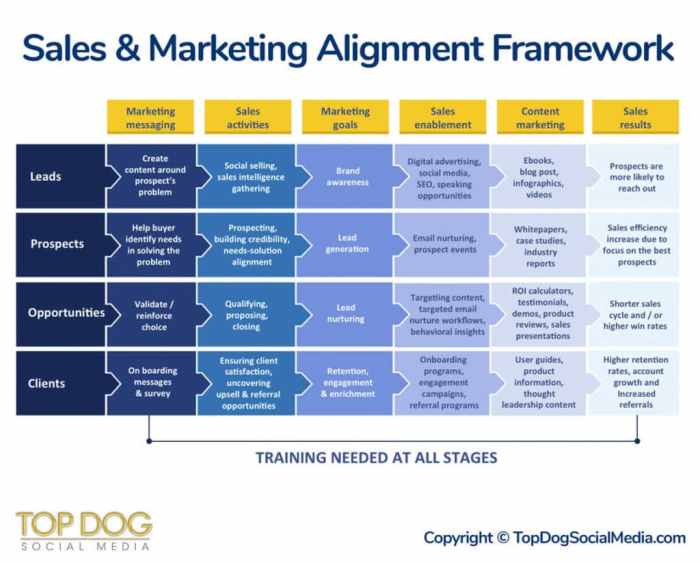
Unlocking exponential growth requires a harmonious dance between business development and marketing. This exploration delves into the synergistic relationship between these two crucial functions, revealing how their alignment fuels success. We’ll examine key performance indicators (KPIs), effective strategies, common challenges, and the transformative role of technology in bridging the gap between these often-siloed departments. Prepare to discover how a unified approach can catapult your organization to unprecedented heights.
From defining effective alignment and measuring its impact to implementing practical strategies and overcoming common obstacles, this guide provides a comprehensive framework for achieving seamless integration between business development and marketing. We will investigate the role of communication, collaboration, and technology in fostering a culture of synergy, ultimately driving revenue growth and market dominance.
Strategies for Achieving Alignment

Successfully aligning business development and marketing requires a strategic approach that fosters collaboration and shared goals. This alignment isn’t merely a matter of improved communication; it’s about creating a unified front that maximizes the impact of both teams’ efforts. Aligning these functions leads to a more efficient use of resources, improved lead generation, and ultimately, stronger business growth.
Comparing and Contrasting Alignment Strategies
Several strategies can be employed to achieve alignment, each with its strengths and weaknesses. A top-down approach, where leadership dictates the overall strategy and metrics, provides clear direction but may stifle team creativity. A bottom-up approach, where teams collaborate to define goals, encourages ownership but might lack overall cohesion. A hybrid approach, combining elements of both, often proves the most effective, balancing top-level guidance with team-level input.
The optimal strategy depends on the organization’s size, culture, and existing structure. For example, a small startup might benefit from a more bottom-up approach, while a large corporation might require a more structured, top-down strategy.
Best Practices for Integrating Business Development and Marketing Teams
Integrating business development and marketing teams requires more than just placing them in the same office. Effective integration involves establishing shared goals, metrics, and processes. This could include joint planning sessions, shared CRM systems, and cross-functional project teams. Regular meetings, both formal and informal, are crucial for maintaining communication and addressing potential conflicts. Furthermore, fostering a culture of collaboration and mutual respect is essential for long-term success.
For instance, implementing a system where marketing provides business development with qualified leads, and business development provides marketing with client feedback, creates a mutually beneficial cycle.
The Role of Communication and Collaboration
Effective communication and collaboration are the cornerstones of successful alignment. This means establishing clear communication channels, regular meetings, and shared tools for tracking progress. Open communication is vital to addressing challenges and ensuring everyone is on the same page. Collaboration extends beyond simply sharing information; it involves actively working together on projects, sharing responsibilities, and supporting each other’s efforts.
A company-wide intranet, dedicated project management software, and regular team-building activities can significantly enhance communication and collaboration. For example, a weekly cross-functional meeting dedicated to reviewing lead generation metrics and discussing strategies for improvement can greatly enhance alignment and accountability.
Implementing an Alignment Strategy: A Step-by-Step Guide
Implementing a successful alignment strategy requires a phased approach.
- Define Shared Goals and Metrics: Clearly articulate overarching business objectives and establish quantifiable metrics for both business development and marketing to track progress toward those goals. This could include revenue targets, lead generation numbers, or customer acquisition costs.
- Develop a Joint Strategic Plan: Create a comprehensive plan outlining how both teams will contribute to achieving the shared goals. This plan should include timelines, responsibilities, and key performance indicators (KPIs).
- Integrate Systems and Processes: Consolidate data and streamline workflows by using shared CRM systems, marketing automation tools, and project management software. This fosters transparency and ensures data consistency.
- Establish Regular Communication Channels: Implement regular meetings, both formal and informal, to facilitate communication, share updates, and address challenges. Utilize communication tools such as instant messaging and email for quick updates and clarifications.
- Foster a Culture of Collaboration: Promote a collaborative environment through team-building activities, cross-functional projects, and open communication. Recognize and reward collaborative efforts to reinforce positive behavior.
- Monitor and Evaluate Progress: Regularly track progress against established KPIs and make adjustments to the strategy as needed. This ensures that the alignment strategy remains effective and adaptable to changing circumstances.
Overcoming Challenges in Alignment
Achieving seamless alignment between business development and marketing teams isn’t always a smooth journey. Friction points are common, stemming from differing perspectives, priorities, and measurement approaches. Successfully navigating these challenges requires proactive strategies and a commitment to fostering a collaborative environment. Addressing these obstacles directly leads to improved efficiency, enhanced ROI, and a stronger overall business performance.
Common obstacles hindering the alignment of business development and marketing often revolve around conflicting priorities, differing metrics for success, and a lack of clear communication. Conflicting priorities might see business development focused on short-term gains while marketing prioritizes long-term brand building. Discrepancies in metrics can lead to misunderstandings about progress and achievements, while poor communication breeds mistrust and inefficiency.
Overcoming these challenges demands a structured approach focusing on shared goals, unified measurement, and open dialogue.
Conflicting Priorities and their Resolution
Conflicting priorities, a frequent source of tension, often arise from differing perspectives on immediate versus long-term goals. Business development teams, frequently driven by quarterly targets, might prioritize quick wins and immediate revenue generation. Marketing teams, however, often focus on building brand awareness and long-term customer relationships, which may not yield immediate, quantifiable results. To overcome this, a joint strategic planning session defining shared, overarching goals is crucial.
These goals should incorporate both short-term wins that satisfy business development and long-term objectives that align with marketing’s vision. This collaborative process ensures both teams work towards a unified outcome, minimizing internal conflict. For example, a shared goal could be “increase market share by 15% within the next year,” incorporating both immediate sales growth and brand building.
Differing Metrics and the Implementation of Unified Measurement
Different metrics often lead to misunderstandings and misaligned efforts. Business development might focus on lead generation and conversion rates, while marketing emphasizes brand awareness and social media engagement. These differing metrics can create a false sense of progress or failure depending on the perspective. To address this, a unified system of measurement, encompassing both short-term and long-term metrics, is necessary.
This system should be agreed upon by both teams and regularly reviewed to ensure accuracy and relevance. For example, a balanced scorecard approach could include metrics such as lead generation, conversion rates, website traffic, social media engagement, and brand sentiment. This holistic view provides a more complete picture of performance and promotes a shared understanding of success.
Case Study: Successful Alignment at “InnovateTech”
InnovateTech, a software company, faced significant challenges aligning its business development and marketing teams. Business development focused heavily on closing immediate deals, while marketing prioritized content creation and brand building. This resulted in conflicting priorities and inefficient resource allocation. To resolve this, InnovateTech implemented a collaborative strategic planning process. They defined shared goals, including increasing market share and improving customer retention.
A unified measurement system, tracking both short-term sales figures and long-term brand metrics, was introduced. Regular cross-functional meetings were instituted to ensure open communication and collaboration. The result? InnovateTech saw a significant improvement in sales performance and brand awareness, demonstrating the positive impact of effective alignment.
Building a Culture of Collaboration
Fostering a culture of collaboration requires a conscious effort from leadership and team members alike. This involves establishing clear communication channels, encouraging regular cross-functional meetings, and promoting mutual respect and understanding between teams. Implementing collaborative project management tools, promoting cross-training opportunities, and recognizing and rewarding collaborative efforts are all key strategies. By creating an environment where both teams feel valued and their contributions are recognized, a collaborative spirit will naturally flourish, leading to improved alignment and enhanced performance.
For instance, joint team-building activities or shared project goals can help break down silos and foster a stronger sense of shared purpose.
The Role of Technology in Alignment
Effective alignment between business development and marketing requires a robust technological infrastructure. The right tools can streamline communication, automate processes, and provide crucial data-driven insights, ultimately leading to increased efficiency and improved results. This section explores the pivotal role technology plays in achieving and maintaining this critical alignment.
Technology’s impact on business development and marketing alignment is multifaceted. By leveraging the right tools, organizations can break down silos, improve data visibility, and foster a more collaborative environment. This ultimately leads to a more cohesive and effective go-to-market strategy.
CRM Systems Facilitate Alignment
Customer Relationship Management (CRM) systems are foundational to aligning business development and marketing efforts. A centralized CRM database provides a single source of truth for all customer interactions, allowing both teams to access the same information, regardless of their specific role. Marketing teams can leverage CRM data to personalize campaigns and target specific customer segments more effectively. Simultaneously, business development teams can use this data to understand customer needs and tailor their sales pitches for better conversion rates.
For instance, a CRM system could track marketing campaign engagement alongside sales interactions, showing which campaigns are most effective in generating qualified leads. This insight allows for optimized resource allocation and more targeted marketing efforts.
Marketing Automation Tools Enhance Efficiency and Collaboration
Marketing automation tools go beyond basic CRM functionality by automating repetitive tasks, such as email marketing, social media posting, and lead nurturing. This automation frees up marketing team members to focus on strategic initiatives that require more creative input and human interaction. Furthermore, the integration of marketing automation with CRM systems creates a seamless workflow. Leads generated through marketing campaigns are automatically added to the CRM, providing sales teams with up-to-date information and context.
This real-time data flow minimizes delays and improves the overall efficiency of the sales process. For example, a marketing automation system might trigger a personalized email sequence to a lead who has downloaded a specific whitepaper, followed by a follow-up call from a sales representative, ensuring a consistent and coordinated customer journey.
Other Technologies Supporting Alignment
Beyond CRMs and marketing automation, several other technologies contribute to improved alignment. These include:
Data analytics dashboards provide real-time insights into campaign performance, sales pipeline progress, and overall business health. This shared visibility allows both teams to track progress toward common goals and make data-driven decisions. For example, a dashboard might show the conversion rate of leads from specific marketing campaigns, enabling the teams to identify areas for improvement and adjust strategies accordingly.
Project management software facilitates collaboration on joint initiatives. Tools like Asana or Trello allow both teams to track progress on shared projects, assign tasks, and communicate effectively. This ensures that both teams are aligned on timelines, deliverables, and overall objectives. For example, a joint project to launch a new product might be managed using a project management tool, allowing for clear task assignment and progress tracking for both marketing and business development teams.
Communication and collaboration platforms, such as Slack or Microsoft Teams, foster real-time communication and information sharing. This ensures that both teams are always on the same page and can quickly address any issues or concerns that arise. For example, using a dedicated channel on a communication platform allows for quick and easy sharing of updates on lead generation, campaign performance, and sales pipeline progress, promoting seamless information flow between the teams.
Technology Implementation Plan
A successful technology implementation requires a phased approach:
Phase 1: Assessment and Selection: Begin by assessing current technology infrastructure and identifying gaps. Evaluate different CRM and marketing automation solutions based on business needs and budget. Consider factors such as scalability, integration capabilities, and user-friendliness. This phase involves detailed analysis of current systems and processes to determine the optimal technology solutions to bridge gaps and enhance alignment.
Phase 2: Integration and Training: Integrate chosen technologies with existing systems and provide comprehensive training to all users. Ensure that data flows seamlessly between different platforms and that all team members are proficient in using the new tools. This phase focuses on establishing the technical infrastructure and equipping the teams with the necessary skills to leverage the new systems effectively.
Phase 3: Monitoring and Optimization: Continuously monitor the performance of the implemented technologies and make adjustments as needed. Track key metrics such as lead generation, conversion rates, and customer satisfaction to measure the impact of the new systems. This ongoing process ensures that the implemented technologies remain effective and are continually optimized to meet evolving business needs.
Business Development and Related Concepts
Business development is the creation of long-term value for an organization. It encompasses a wide range of activities, from identifying new market opportunities to forging strategic partnerships. Understanding the ethical implications and leveraging effective strategies are crucial for successful business development.
Business Development and Business Ethics
Ethical considerations are paramount in business development. A strong ethical foundation builds trust with stakeholders, enhances reputation, and fosters sustainable growth. Unethical practices, conversely, can lead to legal repercussions, damaged reputation, and loss of customer loyalty. The relationship between business development and business ethics is symbiotic; ethical conduct underpins successful, long-term business development.
| Ethical Consideration | Description | Example of Unethical Practice | Example of Ethical Practice |
|---|---|---|---|
| Transparency | Open and honest communication with all stakeholders. | Misrepresenting product capabilities to secure a deal. | Clearly outlining contract terms and conditions. |
| Fair Competition | Respecting intellectual property rights and avoiding anti-competitive behavior. | Stealing trade secrets from a competitor. | Developing innovative products and services. |
| Customer Focus | Prioritizing customer needs and providing excellent service. | Selling substandard products or services. | Offering excellent customer support and addressing complaints promptly. |
| Environmental Responsibility | Minimizing environmental impact through sustainable practices. | Disregarding environmental regulations to reduce costs. | Investing in eco-friendly technologies and reducing carbon footprint. |
Effective Business Coaching Strategies
Business coaching plays a vital role in enhancing business development skills. Effective coaching focuses on identifying and addressing skill gaps, fostering strategic thinking, and promoting personal and professional growth.
Examples of effective strategies include:
- Goal Setting and Action Planning: Coaches help business developers define clear, measurable, achievable, relevant, and time-bound (SMART) goals and develop action plans to achieve them.
- Strategic Thinking and Problem-Solving: Coaches guide business developers in analyzing market trends, identifying opportunities, and developing effective solutions to challenges.
- Mentorship and Networking: Coaches connect business developers with experienced professionals and provide guidance on networking strategies.
- Skill Development and Training: Coaches identify skill gaps and provide resources for professional development, such as workshops or online courses.
The Role of Business Loans in Supporting Business Development
Business loans provide crucial financial resources for business development initiatives. They can fund expansion projects, new product development, marketing campaigns, and operational improvements. Access to appropriate financing can significantly accelerate growth and competitiveness. However, careful planning and financial management are essential to ensure loan repayment and avoid financial distress. Different types of loans, such as term loans, lines of credit, and SBA loans, cater to various business needs and risk profiles.
Comparison of Different Business Models
Different business models, such as B2B (business-to-business), B2C (business-to-consumer), and subscription models, have varying implications for business development. B2B often involves longer sales cycles and focuses on building strong relationships, while B2C emphasizes marketing and brand building to reach a wider audience. Subscription models prioritize customer retention and recurring revenue streams. The choice of business model significantly impacts marketing strategies, sales processes, and overall business development efforts.
Business Strategy’s Impact on Business Development
Business strategy provides the overarching framework for business development. A well-defined strategy ensures that business development activities are aligned with overall organizational goals and objectives.
- Market Analysis: A clear understanding of the target market, competitive landscape, and market trends informs business development activities.
- Value Proposition: A compelling value proposition differentiates the business from competitors and attracts customers.
- Resource Allocation: Business strategy guides the allocation of resources (financial, human, and technological) to support business development initiatives.
- Growth Strategy: The chosen growth strategy (e.g., market penetration, market development, product development) dictates the focus of business development efforts.
- Performance Measurement: Key performance indicators (KPIs) aligned with the business strategy track the success of business development activities.
The Importance of Business Travel in Business Development
Business travel plays a crucial role in fostering relationships, building trust, and closing deals. Face-to-face interactions are often more effective than virtual communication, particularly in complex negotiations or establishing new partnerships. Business travel allows for networking opportunities, site visits, and direct engagement with clients and partners, contributing significantly to business development success.
Successfully aligning business development and marketing isn’t merely a tactical adjustment; it’s a strategic imperative for sustained growth. By understanding the symbiotic relationship between these functions, implementing effective strategies, and leveraging technology to enhance collaboration, organizations can unlock a powerful engine for achieving their business objectives. The journey towards alignment demands consistent effort, clear communication, and a commitment to breaking down departmental silos.
The rewards, however, are undeniable: a unified force driving market leadership and sustained success.
Helpful Answers
What are some common signs of poor business development and marketing alignment?
Poor communication between teams, conflicting priorities, inconsistent messaging, duplicated efforts, and lack of shared KPIs are key indicators.
How can we measure the ROI of aligning business development and marketing?
Track key metrics such as lead generation, conversion rates, customer acquisition cost, and overall revenue growth. Compare these metrics before and after alignment initiatives.
How can we ensure ongoing alignment once it’s achieved?
Regular communication, shared goals, cross-functional team meetings, and consistent monitoring of KPIs are essential for maintaining alignment.
What role does leadership play in achieving alignment?
Leadership must champion the alignment initiative, provide resources, foster a collaborative culture, and hold teams accountable for shared goals.


