
Navigating the ever-shifting landscape of business requires adaptability, and sometimes, a complete overhaul. A business model pivot, the strategic shift in your core operations, can be the key to survival and even explosive growth. This guide explores the process, from identifying the need for change to successfully implementing a new strategy and managing the transition.
We’ll delve into analyzing your current model, brainstorming alternatives, developing a detailed plan, and managing the crucial transition period. Crucially, we’ll also address ethical considerations, securing funding, and aligning your pivot with your overall business strategy. This isn’t just about changing direction; it’s about building a more resilient and successful future.
Identifying the Need for a Pivot
Recognizing the need for a business model pivot is crucial for survival and growth. Ignoring warning signs can lead to stagnation and ultimately, failure. A proactive approach, involving continuous monitoring and analysis, is key to identifying these crucial moments.A business model pivot signifies a strategic shift in how a company creates, delivers, and captures value. It’s not simply a minor adjustment; it’s a fundamental change in approach, often requiring significant alterations to operations, marketing, and even the company’s core offering.
Signs Indicating a Need for a Business Model Pivot
Several indicators suggest a business model requires revision. Persistent underperformance, despite consistent efforts, is a major red flag. This could manifest as declining revenue, shrinking market share, or consistently failing to meet projected targets. Furthermore, a significant shift in market dynamics, such as the emergence of disruptive technologies or changing consumer preferences, demands careful consideration of a potential pivot.
Finally, internal issues like low employee morale, high operational costs, or unsustainable scaling challenges can also point towards the need for a strategic shift.
Common Reasons for Business Model Pivots
Businesses often pivot due to unforeseen market changes or internal limitations. Rapid technological advancements can render existing business models obsolete. For example, the rise of streaming services significantly impacted the traditional DVD rental market. Similarly, evolving consumer preferences, such as a growing demand for sustainable products or personalized experiences, necessitate adapting business models to meet these new demands.
Internal factors, such as a lack of scalability or inefficient operations, also frequently drive pivots. A company might find its current structure incapable of handling rapid growth or that its cost structure is unsustainable in the long term.
Examples of Successful Business Pivots
Several companies have successfully pivoted their business models, leading to significant growth and success. Netflix, initially a DVD rental service, successfully transitioned to a streaming platform, adapting to the changing landscape of media consumption. This pivot leveraged technological advancements and evolving consumer preferences for on-demand content. Similarly, Slack, initially conceived as a gaming company, pivoted to become a leading workplace communication platform, recognizing the growing demand for efficient team collaboration tools.
Their success highlights the importance of adaptability and the ability to identify emerging market needs.
Types of Business Model Pivots
Different types of pivots exist, each focusing on a specific aspect of the business model. A customer segment pivot involves targeting a completely new customer group. For instance, a company initially focused on enterprise clients might pivot to target individual consumers. A value proposition pivot focuses on altering the core offering to better meet customer needs. This might involve adding new features, improving existing ones, or completely redesigning the product or service.
Finally, a revenue stream pivot involves changing how the company generates revenue. This could involve introducing new pricing models, subscription services, or alternative monetization strategies. Each type of pivot presents unique challenges and opportunities, requiring careful planning and execution.
Exploring New Business Model Options
Identifying the need for a pivot is only the first step. The next crucial phase involves creatively exploring and developing alternative business models that align with your company’s strengths and the evolving market demands. This process requires a thorough understanding of your industry, competitive landscape, and target audience.
Brainstorming potential alternatives is key. Consider factors such as your existing resources, customer needs, and emerging trends. Don’t be afraid to think outside the box and consider models outside your current industry’s norms. The goal is to identify options that offer sustainable growth and profitability.
Three Distinct Business Model Options
Let’s consider a hypothetical example of a small bakery facing declining foot traffic. We’ll develop three distinct business model options to illustrate the process:
- Option 1: Subscription Box Service. This model focuses on recurring revenue. Customers subscribe to a weekly or monthly delivery of freshly baked goods. Core components include a subscription management platform, efficient logistics for delivery, and high-quality product consistency. Market opportunity lies in the convenience factor and the growing popularity of subscription services. This approach targets customers who value convenience and consistent access to high-quality baked goods.
- Option 2: Wholesale Partnerships. This involves partnering with local cafes, restaurants, and grocery stores to supply them with baked goods. Core components include establishing strong supplier relationships, maintaining consistent production to meet demand, and competitive pricing strategies. Market opportunity exists in expanding the bakery’s reach and increasing sales volume. This approach leverages existing production capacity and expands market reach.
- Option 3: Baking Classes and Workshops. This model shifts the focus to experiential offerings. The bakery hosts hands-on baking classes and workshops for both adults and children. Core components include developing engaging class curricula, securing instructors, and marketing the classes effectively. Market opportunity lies in capitalizing on the growing interest in culinary experiences and community engagement. This approach diversifies revenue streams and strengthens brand loyalty.
Market Opportunities and Financial Projections
Each model presents unique market opportunities and financial implications. Let’s examine these aspects using simplified projections.
| Business Model | Market Opportunity | Projected Revenue (Year 1) | Projected Profit Margin |
|---|---|---|---|
| Subscription Box Service | Growing demand for convenient food delivery | $50,000 | 20% |
| Wholesale Partnerships | Increased sales volume through partnerships | $75,000 | 15% |
| Baking Classes & Workshops | Growing interest in culinary experiences | $30,000 | 25% |
Note: These are simplified projections and actual figures will vary depending on various factors such as marketing effectiveness, operational efficiency, and market conditions. Detailed financial modeling is essential before making a final decision. For instance, the subscription box service might require a significant upfront investment in packaging and delivery infrastructure, impacting initial profitability. Wholesale partnerships might involve negotiating favorable contracts and managing inventory effectively to maintain profit margins.
Baking classes require marketing efforts to attract participants and securing qualified instructors. A thorough cost-benefit analysis should be conducted for each option.
Developing a Detailed Pivot Plan
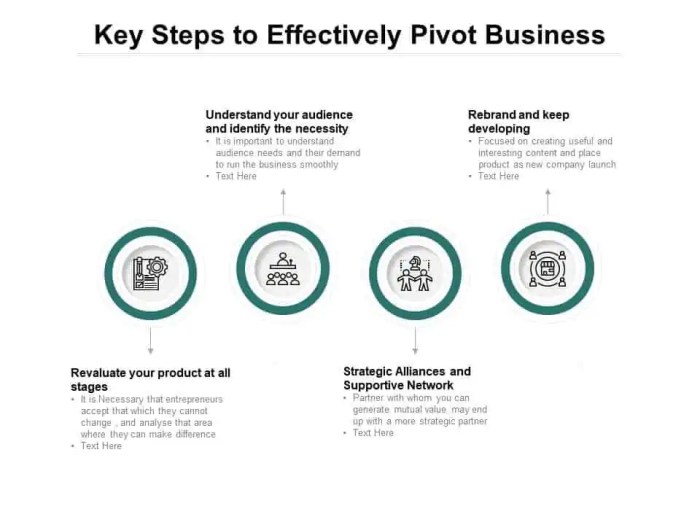
A successful business model pivot requires meticulous planning. This involves outlining a step-by-step implementation strategy, identifying necessary resources, establishing a realistic timeline, and anticipating the impact on various business aspects. Failing to properly plan a pivot can lead to wasted resources and ultimately, failure. Therefore, a detailed and comprehensive plan is crucial for a smooth transition.
Step-by-Step Implementation Plan
A well-defined plan breaks down the pivot into manageable steps, reducing complexity and increasing the likelihood of success. Each step should have clear deliverables and assigned responsibilities. For example, a company pivoting from a brick-and-mortar retail model to an e-commerce model might first focus on developing a user-friendly website, followed by integrating a secure payment gateway, then implementing a robust marketing strategy for online channels.
Subsequent steps could include establishing fulfillment and logistics, and customer service processes for online orders. This phased approach minimizes disruption and allows for continuous monitoring and adjustment.
Resource Requirements
The pivot will necessitate a careful assessment of financial, human, and technological resources. Financial resources might include funding for website development, marketing campaigns, new software, or hiring additional staff. Human resources encompass the skills and expertise required for the new business model. This could involve hiring specialists in e-commerce, digital marketing, or data analytics, or retraining existing employees.
Technological resources involve the infrastructure and tools necessary to support the new model. This may include new software applications, upgraded hardware, or cloud-based services. For instance, a company shifting to a subscription-based model would need to invest in subscription management software and potentially customer relationship management (CRM) systems.
Timeline and Milestones
A realistic timeline with key milestones and deadlines is essential. This should include specific dates for completing each step of the implementation plan. For example, the development of the new website might have a deadline of three months, followed by a one-month period for testing and quality assurance. The launch of the new marketing campaign could be scheduled for a month after the website launch.
Regular progress reviews should be conducted to ensure the pivot stays on track. Missing deadlines can lead to project delays and increased costs. Consider using project management software to track progress and identify potential roadblocks.
Impact on Business Aspects
The pivot will inevitably impact various aspects of the business. Operations may require adjustments to processes, workflows, and infrastructure. Marketing strategies will need to adapt to the new target audience and channels. Sales strategies might require changes in pricing, distribution, and customer engagement. For example, a company shifting from a product-based business to a service-based business would need to revise its sales process to focus on consulting and relationship building rather than just product transactions.
Understanding and planning for these impacts will minimize disruptions and maximize the chances of a successful transition.
Managing the Transition
Successfully pivoting a business model requires careful management of the transition phase. Minimizing disruption, effectively communicating changes, and accurately measuring progress are crucial for a smooth and successful pivot. Ignoring these aspects can lead to decreased morale, lost customers, and ultimately, failure.Minimizing Disruption During the TransitionEffective transition management involves a strategic approach to minimizing disruption to daily operations.
This requires a phased implementation of the new model, allowing for adjustments based on real-time feedback. Prioritizing key aspects of the pivot and implementing them in stages reduces the risk of overwhelming the team and negatively impacting existing operations. For instance, a company shifting from a solely brick-and-mortar model to an online one might first focus on establishing a robust e-commerce platform before fully phasing out physical locations.
This gradual approach allows for testing, adaptation, and minimizes potential negative impacts on sales and customer relationships.
Communication Strategies for Stakeholders
Open and transparent communication is vital throughout the pivot process. Employees need to understand the rationale behind the change, their role in the transition, and what the future holds for them. Customers need reassurance that their needs will continue to be met, even with the shift in the business model. Investors require clear explanations of the strategic shift, its potential risks and rewards, and the projected timeline for achieving key milestones.
A multi-faceted communication strategy should be employed, utilizing various channels like internal memos, town hall meetings, email updates, and social media announcements tailored to each stakeholder group. For example, a company transitioning to a subscription-based model might send targeted emails to customers highlighting the benefits of the new service and offering incentives for early adoption.
Measuring Pivot Success and Tracking KPIs
Tracking key performance indicators (KPIs) is essential for monitoring the success of the pivot and making necessary adjustments. Relevant KPIs will vary depending on the nature of the pivot, but they should directly reflect the goals of the new business model. These could include metrics such as customer acquisition cost (CAC), customer lifetime value (CLTV), monthly recurring revenue (MRR), website traffic, conversion rates, and customer satisfaction scores.
Regular monitoring of these KPIs allows for timely identification of issues and allows for the necessary course corrections. For example, if customer acquisition costs are unexpectedly high, the marketing strategy might need to be reevaluated. Consistent tracking provides data-driven insights to optimize the pivot strategy.
Adapting to Unexpected Challenges
The pivot process is rarely linear; unforeseen challenges are almost inevitable. Developing contingency plans to address potential roadblocks is crucial. These plans should anticipate issues such as slower-than-expected adoption rates, unexpected competition, or technical difficulties. Maintaining flexibility and adaptability is key; the ability to quickly adjust strategies based on real-time data is essential. For instance, if a new competitor emerges during the pivot, the company might need to adjust its pricing or marketing strategies to remain competitive.
Regular review meetings and open communication channels allow for quick identification and resolution of problems.
Business Development Considerations
A successful pivot necessitates a reassessment and recalibration of your business development strategies. The shift in your business model will likely impact your target audience, value proposition, and go-to-market approach, requiring a comprehensive review of your existing development plans. This involves not only adapting your current strategies but also actively exploring new avenues for growth.The impact of a pivot on business development is multifaceted.
It necessitates a re-evaluation of your sales process, marketing channels, and customer relationship management (CRM) systems. For example, a company pivoting from a B2C (Business-to-Consumer) model to a B2B (Business-to-Business) model will need to develop new sales strategies focused on relationship building and long-term contracts, rather than individual customer transactions. This also requires a change in marketing messaging, focusing on the benefits for businesses rather than individual consumers.
Impact of Pivot on Business Development Strategies
The pivot fundamentally alters your business development landscape. Existing strategies may become obsolete or require significant adaptation. For instance, a company pivoting from a product-focused model to a service-based model will need to focus on building expertise and reputation, rather than solely on product features and specifications. This transition demands a reevaluation of sales cycles, pricing strategies, and customer acquisition costs.
Furthermore, the key performance indicators (KPIs) used to track success will also need to be adjusted to reflect the new business model.
Potential Partnerships and Collaborations
Strategic partnerships and collaborations can significantly accelerate the success of a pivot. Identifying companies or organizations whose offerings complement your new business model can create synergistic opportunities. For example, a company pivoting to a subscription-based model might partner with a payment processing company to streamline billing and customer management. Similarly, a company launching a new software-as-a-service (SaaS) product could collaborate with a marketing agency specializing in digital marketing to reach its target audience.
These partnerships can provide access to new markets, technologies, and resources, minimizing the risks associated with the pivot.
Attracting New Customers Under the Revised Business Model
Acquiring new customers after a pivot requires a targeted approach. Understanding the needs and preferences of your new target audience is crucial. This may involve conducting market research to identify their pain points and preferences, and tailoring your marketing messages to address these specific needs. Effective strategies might include content marketing focusing on educational resources and case studies demonstrating the value proposition of your new business model.
Social media marketing can be used to build brand awareness and engage with potential customers. Moreover, leveraging online advertising and search engine optimization () can help attract organic traffic to your website.
Marketing Plan Tailored to the New Business Model
A successful pivot requires a comprehensive marketing plan aligned with the new business model. This plan should clearly define the target audience, key messaging, and marketing channels. It should also include specific goals and metrics for measuring the success of the marketing initiatives. For example, a company pivoting to a premium-priced product might focus on content marketing, influencer marketing, and public relations to establish credibility and desirability.
Conversely, a company offering a low-cost product might prioritize online advertising and social media marketing to reach a broader audience. The marketing plan must be flexible and adaptable, allowing for adjustments based on performance data and market feedback.
Business Ethics and the Pivot
A business model pivot, while potentially lucrative, necessitates careful consideration of ethical implications. Navigating this transition requires a commitment to transparency, fairness, and integrity, ensuring all stakeholders are treated equitably and informed throughout the process. Failure to address ethical considerations can severely damage a company’s reputation and lead to legal repercussions.Ethical considerations during a business model pivot are multifaceted and require proactive planning.
Maintaining ethical standards is crucial not only for legal compliance but also for preserving stakeholder trust and long-term business success. A robust ethical framework should be established and consistently applied throughout the transition.
Potential Ethical Challenges and Proposed Solutions
Ethical challenges can arise in several areas during a pivot. For example, changes to pricing strategies or product offerings might impact existing customers negatively. Similarly, shifts in operations could lead to job losses or require employees to acquire new skills. To mitigate these challenges, companies should proactively communicate changes, offer support and retraining opportunities for employees, and implement fair pricing practices that balance profitability with customer value.
For instance, a company pivoting from a subscription model to a freemium model should clearly communicate the changes to subscribers, offering them a fair transition plan and addressing concerns about reduced functionality or increased costs. Transparency and open communication are paramount in maintaining trust.
Maintaining Transparency and Integrity Throughout the Transition
Transparency is key to maintaining integrity during a business model pivot. Openly communicating the reasons for the pivot, the expected impact on stakeholders, and the steps taken to mitigate potential negative consequences builds trust and minimizes misunderstandings. This includes providing regular updates to employees, customers, and investors, outlining the progress of the transition and addressing any concerns that arise.
For example, a company might create a dedicated webpage or internal communication channel to share updates, answer questions, and solicit feedback. This demonstrates a commitment to ethical conduct and strengthens relationships with stakeholders.
Addressing Potential Concerns from Employees or Customers
Addressing concerns from employees and customers is vital to a successful and ethical pivot. Companies should establish clear communication channels to gather feedback and address anxieties. This could involve holding town hall meetings, conducting surveys, or providing individual consultations. For instance, if a pivot leads to layoffs, the company should provide severance packages, outplacement services, and support for job searching.
Similarly, if changes affect customer service or product offerings, the company should proactively communicate the changes and provide adequate support to help customers adapt. Active listening and prompt responses to concerns are crucial for maintaining trust and minimizing negative impacts. A proactive approach to communication and support demonstrates a commitment to ethical conduct and builds stronger relationships with stakeholders.
Successfully pivoting your business model requires careful planning, execution, and adaptability. By thoroughly analyzing your current situation, exploring viable alternatives, and developing a comprehensive plan, you can navigate the transition with minimal disruption and maximize your chances of success. Remember that continuous monitoring and adjustment are key to ensuring your new model thrives in the long term. Embrace the challenge, and you’ll unlock new opportunities for growth and profitability.
FAQs
What if my pivot fails?
While a pivot carries risk, thorough planning mitigates this. Learn from setbacks, analyze what went wrong, and iterate. A failed pivot isn’t necessarily a business failure; it’s valuable learning experience.
How long does a business model pivot typically take?
The timeframe varies significantly depending on the scale and complexity of the change. Some pivots can be implemented within months, while others may take years.
How can I involve my employees in the pivot process?
Open communication is crucial. Involve employees early, explaining the reasons for the pivot and seeking their input. This fosters buy-in and reduces resistance to change.
Should I seek external advice during a pivot?
Yes, consider engaging business consultants or mentors. They offer objective perspectives and expertise you may lack internally.


